
In suspected stroke, every minute matters. Rapid identification of the underlying cause is essential for selecting the correct treatment strategy and preventing recurrent events.
A portable ultrasound scanner has become a critical tool in emergency medicine, enabling clinicians to perform bedside cardiac and vascular assessment without delay. Modern wireless ultrasound scanners, connected to smartphones or tablets, provide sufficient image quality for real-time clinical decisions.
This article presents a clinical case demonstrating how a portable ultrasound system helped identify a cardioembolic source of stroke. It also explains why portable ultrasound devices are increasingly used in modern stroke diagnostics and emergency care.
Portable Ultrasound in Suspected Stroke: Clinical Importance of Early Diagnosis
The use of a portable ultrasound scanner in suspected stroke significantly improves diagnostic efficiency.
Early detection of a cardioembolic source allows clinicians to:
▪️initiate anticoagulation therapy promptly
▪️reduce the risk of recurrent stroke
▪️improve overall patient outcomes
▪️optimize emergency workflow
A wireless ultrasound scanner enables immediate bedside echocardiography, eliminating delays associated with patient transport to imaging departments.
Healthcare professionals can learn more about portable ultrasound systems to understand their role in modern stroke protocols.
Clinical Case: Bedside Diagnosis Using a Portable Ultrasound Scanner
A 72-year-old male patient was urgently admitted with suspected ischemic stroke. Clinical symptoms included:
▪️sudden right-sided weakness
▪️speech impairment
▪️facial asymmetry
▪️decreased level of consciousness
The patient had a history of myocardial infarction and had not received regular cardiology follow-up.
Bedside Assessment with a Wireless Ultrasound Scanner
A portable ultrasound scanner was used directly at the bedside to evaluate both the carotid arteries and cardiac structures.
Findings included:
▪️no significant carotid artery stenosis
▪️absence of atherosclerotic plaques causing obstruction
▪️no vascular occlusion
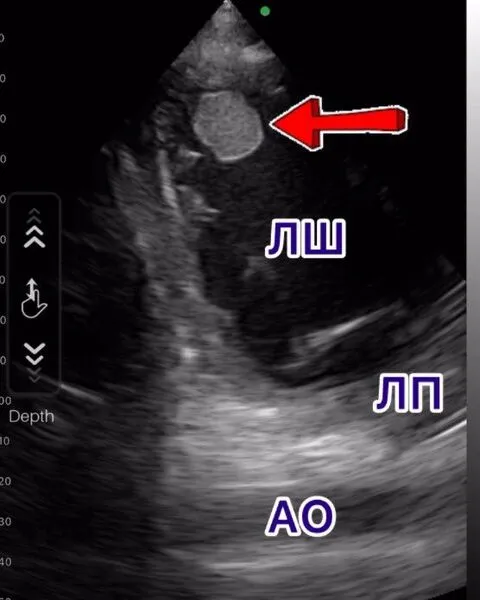
However, cardiac imaging using a wireless ultrasound scanner revealed:
▪️a well-defined echogenic mass in the left ventricular apex
▪️homogeneous structure with clear contours
▪️absence of synchronized contraction with the myocardium
▪️attachment to the endocardial surface
These findings were consistent with a left ventricular thrombus, a known cardioembolic source.
Cardioembolic Stroke and the Role of Portable Ultrasound Systems
A portable ultrasound system plays a crucial role in identifying cardiac sources of embolism.
Left ventricular thrombi are commonly associated with:
▪️previous myocardial infarction
▪️reduced ventricular contractility
▪️long-term risk of embolic complications
The use of a portable ultrasound device allows clinicians to confirm the diagnosis immediately and initiate appropriate therapy without delay.
In emergency settings, this approach significantly reduces diagnostic time and improves patient safety.
Advantages of a Portable Ultrasound Scanner in Emergency Practice
Modern portable ultrasound scanners offer multiple clinical advantages:
▪️immediate bedside diagnostics
▪️rapid image acquisition
▪️reduced need for patient transport
▪️real-time clinical decision-making
▪️ability to repeat examinations
Clinicians can explore wireless ultrasound scanners to enhance diagnostic capabilities in emergency and critical care settings.
Wireless Ultrasound Scanner: Expanding Clinical Possibilities
A wireless ultrasound scanner transforms how ultrasound is used in clinical practice.
Key benefits include:
▪️full mobility within clinical environments
▪️compatibility with smartphones and tablets
▪️efficient use in emergency and bedside settings
▪️reliable imaging for diagnostic purposes
These features make portable ultrasound devices essential tools for modern healthcare systems.
Clinical Value of Portable Ultrasound Devices for Physicians
A portable ultrasound scanner supports physicians in:
▪️rapid identification of stroke etiology
▪️reduction of diagnostic delays
▪️improved patient safety
▪️adherence to clinical guidelines
In suspected stroke, a portable ultrasound system enables clinicians to act quickly and confidently, improving both workflow and patient outcomes.
Equipment Selection: Choosing the Right Portable Ultrasound System
When selecting a portable ultrasound system, several factors should be considered:
| Feature | Clinical Importance |
|---|---|
| Image quality | Accurate detection of intracardiac structures |
| Portability | Enables bedside diagnostics |
| Wireless connectivity | Supports mobile device integration |
| Versatility Ease of use | Applicable across multiple specialties Improves clinical efficienc |
Healthcare providers can see our ultrasound equipment catalog to evaluate suitable solutions.
Portable Ultrasound Solutions Available from Sante Integrale
Modern portable ultrasound scanners available from Sante Integrale are widely used in clinical practice.
These systems are:
▪️designed for real-world medical environments
▪️suitable for emergency and outpatient settings
▪️reliable for rapid clinical decision-making
As a trusted provider, Sante Integrale offers portable ultrasound devices that support high-quality diagnostics. Clinicians can also check available ultrasound devices to find solutions tailored to their needs.
Conclusion: Portable Ultrasound as a Standard in Stroke Diagnostics
This clinical case demonstrates that a portable ultrasound scanner is an essential tool in suspected stroke.
A wireless ultrasound scanner enables:
▪️immediate bedside diagnosis
▪️faster therapeutic decisions
▪️improved patient outcomes
The integration of portable ultrasound systems into clinical workflows represents a significant advancement in modern healthcare, enhancing both efficiency and quality of care.
FAQ: Portable Ultrasound in Stroke Diagnosis
1. Can a portable ultrasound scanner detect a cardioembolic source?
Yes. A portable ultrasound scanner can identify intracardiac thrombi and other embolic sources in emergency settings.
2. Is a wireless ultrasound scanner suitable for clinical use?
Yes. A wireless ultrasound scanner provides reliable imaging for bedside diagnostics and emergency decision-making.
3. Who benefits from portable ultrasound systems?
Emergency physicians, cardiologists, neurologists, and general practitioners benefit from portable ultrasound systems.
4. Can a portable ultrasound device replace traditional systems?
In many urgent scenarios, a portable ultrasound device provides sufficient information for clinical decisions.
5. Why use portable ultrasound in suspected stroke?
A portable ultrasound scanner allows rapid diagnosis, reduces delays, and improves patient outcomes.